
Summer Wedding Guest Jewellery: How to Style Gemstone Pendants with Pastels
A seasonal guide to pairing gemstone pendants with pastel wedding guest outfits — choosing stones by...

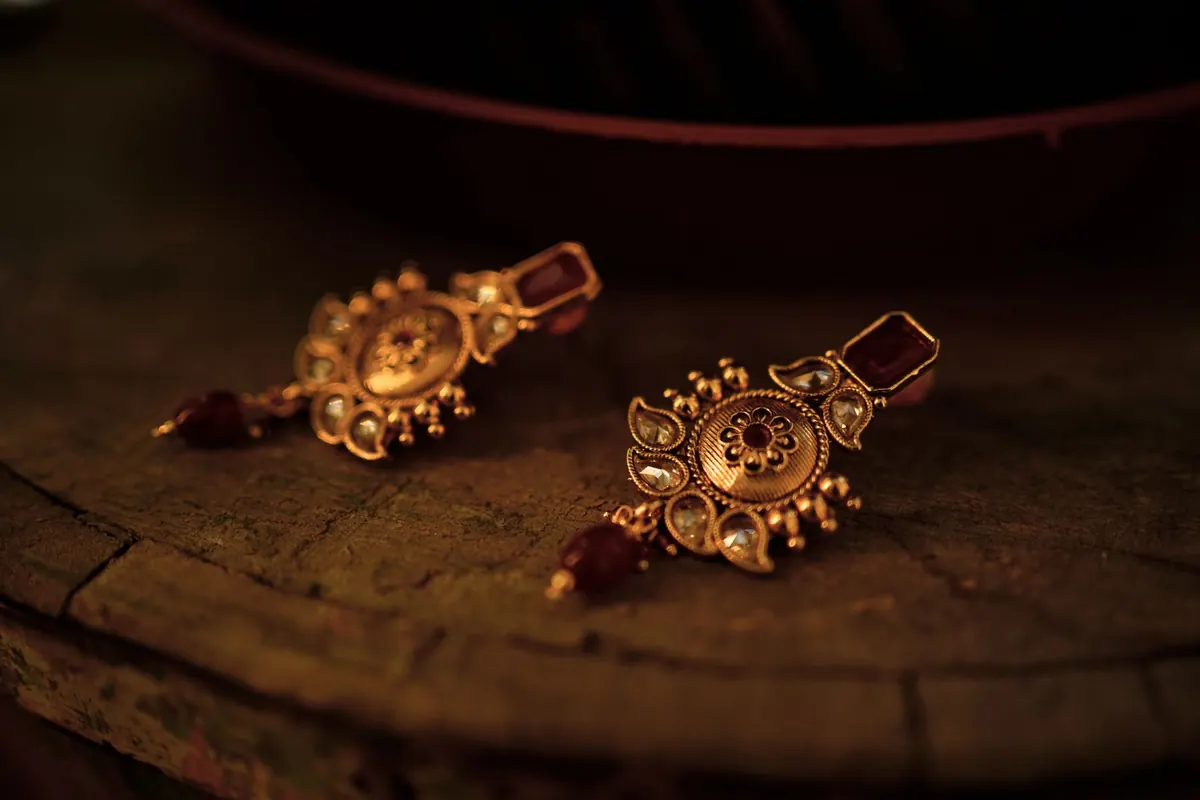
Few things take the shine off new gemstone studs faster than an itchy, red earlobe by mid-afternoon. If your ears react to most earrings, the culprit is rarely the stone itself. It is almost always the metal it sits in, the coating over that metal, or the back resting against your skin. Once you know what to check, shopping gets a lot quicker. Here is the checklist worth running through before you buy any pair of gemstone studs or drops.
Amethyst, garnet, moonstone, tourmaline: these stones are chemically stable and are seldom the source of a reaction. Metals are the usual problem, and nickel sits at the top of the list. It is one of the most common causes of contact allergy, and it turns up in white gold alloys, cheaper silver-toned metals and the springs inside earring backs.
Broadly, the safer bets are:
Be warier of 9ct gold, white gold (often alloyed and rhodium-plated), brass, bronze, copper and anything sold as "nickel silver" — which, despite the name, contains no silver at all and plenty of nickel. Surgical or stainless steel is a mixed bag: 316L contains nickel, and "surgical steel" is not a regulated grade, so ask for a nickel-free statement rather than assuming.
On a stud, only a few surfaces make contact: the post, the back, and the front frame around the stone. A bezel setting wraps metal around the stone's edge, which protects it but gives the metal more contact with your lobe. A prong setting leaves more stone exposed and often less metal against the skin. Neither is automatically better — what matters is that every part touching you is a metal you trust.
Watch for glue. Budget earrings often fix the stone into a metal cup with adhesive. Glue can crack and trap soap and moisture, and the cup underneath is frequently the cheapest metal in the piece. If a listing does not tell you how the stone is held, ask before buying.
Plating is where a lot of "sensitive skin" earrings quietly stop working. Rhodium over white gold, gold over brass and thin PVD coatings all feel fine at first, then wear through at the points of friction — the post, the back, the edge of the setting — exposing whatever is underneath. That is why a pair can be comfortable for months and then suddenly not.
So ask what is under the finish. Gold-plated titanium and gold-plated brass behave very differently once the surface thins. Vermeil, a thicker layer of gold over sterling silver, generally outlasts standard plating. Anti-tarnish lacquers on silver can also flake with wear, and the flakes are not kind to a healing piercing.
Butterfly backs are the usual suspect: the spring inside is often nickel-bearing steel, pressed against the back of your lobe all day. If a pair of earrings seems fine but your ears still itch, try changing the backs before giving up on the studs.
Hinged huggies and lever-backs hide their mechanism, so ask about the pin and spring, not just the front.
Before you add anything to basket, confirm the following:
Clean and dry matters more than most people expect. Residue from soap, hairspray, sunscreen and moisturiser sits between the metal and your skin, and it can make a mild sensitivity feel far worse. Wipe the posts with a soft cloth after each wear and let the piercings dry fully before putting anything back in.
Take earrings out before bed, before swimming and before the gym. Chlorine and sweat are harsh on both plating and lobes, and sleeping in studs pushes the back into the skin for hours at a time. Rotating your earrings, and leaving your lobes bare for a night or two each week, gives them a chance to settle.
If a reaction persists — cracking, weeping, swelling or a rash that spreads — stop wearing the earrings and speak to a pharmacist, GP or dermatologist. Patch testing can identify a metal allergy properly, which saves a lot of guesswork.
Most people with sensitive ears end up with two or three metals that reliably suit them. Once you know yours, keep one plain, known-safe pair as a control. When something new arrives, wear the safe stud in one ear and the new pair in the other for a few hours — if only one side reacts, you have your answer before you commit to a full day.
Buy fewer pairs and ask more questions. A jeweller who can tell you the exact alloy, the base metal under any plating and the material of the backs is far more useful than one who simply promises the earrings are gentle. Gemstones are worth the fuss; the metal around them just has to earn its place.
Photo: viresh studio / Pexels
A seasonal guide to pairing gemstone pendants with pastel wedding guest outfits — choosing stones by...
A practical UK guide to buying gemstone bracelets, comparing high street shops and online sellers on...
A practical beginner's guide to choosing gemstone earrings — which metals suit sensitive ears, how each...